

Intubation Healthcare
Heavy-Duty Steinmann Pin & Rod Cutting Pliers with Locking System
Heavy-Duty Steinmann Pin & Rod Cutting Pliers with Locking System
Couldn't load pickup availability
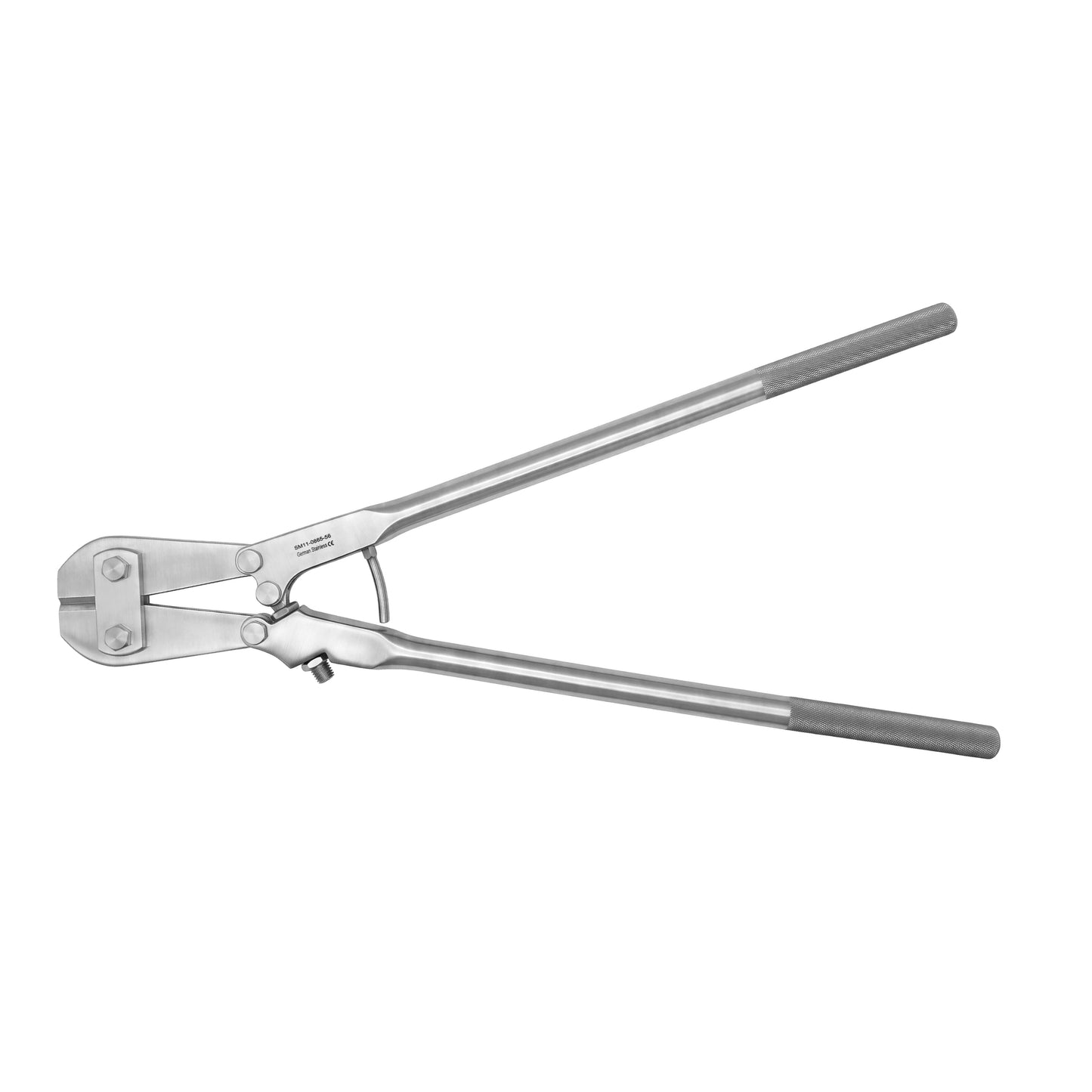
Heavy-Duty Steinmann Pin and Rod Cutting Pliers with Locking System are robust orthopedic surgical instruments designed for the controlled cutting of Steinmann pins, surgical rods, and compatible orthopedic fixation materials. The heavy-duty construction provides the strength and leverage required for demanding orthopedic, trauma, and reconstructive procedures.
These surgical pin cutting pliers feature an integrated locking system for controlled handling and are available in 30cm, 38cm, 47cm, and 56cm lengths. The range of sizes enables the operating professional to select an appropriate combination of access, leverage, reach, and handling control according to the procedure.
Explore professional medical and surgical products from Intubation Healthcare Inc.
Key Features
- Heavy-duty cutting instrument: Designed for demanding orthopedic pin and surgical rod cutting procedures.
- Steinmann pin cutting application: Intended for controlled cutting of compatible Steinmann pins and orthopedic fixation materials.
- Up to 3mm cutting capacity: Suitable for compatible pins, rods, and wires within the specified material and diameter limits.
- Integrated locking system: Supports controlled handling and secure management of the instrument.
- Four length options: Available in 30cm, 38cm, 47cm, and 56cm variants.
- Extended handle leverage: Longer variants provide increased mechanical leverage for demanding cutting applications.
- Stainless-steel construction: Provides the strength, durability, and corrosion resistance required for professional surgical environments.
- Reusable surgical instrument: Designed for cleaning, inspection, and sterilization according to validated facility protocols.
Available Length Variants
| SKU | Length | Selection Guidance |
|---|---|---|
| Sm11-0865-30 | 30cm | A compact option for procedures requiring closer handling, maneuverability, and controlled access. |
| Sm11-0865-38 | 38cm | A medium-length configuration offering a practical balance of reach, leverage, and instrument control. |
| Sm11-0865-47 | 47cm | An extended-length option for procedures requiring additional reach and increased mechanical leverage. |
| Sm11-0865-56 | 56cm | The longest available configuration for maximum reach and leverage in demanding orthopedic applications. |
Product Specifications
- Product Name: Heavy-Duty Rods / Steinmann Pin Cutting Plier
- Instrument Type: Orthopedic Pin and Rod Cutting Pliers
- Available Lengths: 30cm, 38cm, 47cm, and 56cm
- Cutting Capacity: Up to 3mm
- Locking Mechanism: Integrated Locking System
- Material: Stainless Steel
- Design: Heavy-Duty Surgical Cutting Pliers
- Primary Application: Cutting Steinmann Pins and Compatible Orthopedic Rods
- Use Type: Reusable Professional Surgical Instrument
- Package Includes: One cutting plier in the selected length
Length Selection Guide
30cm Pin Cutting Plier
The 30cm variant provides a comparatively compact configuration for closer instrument handling and maneuverability. It may be selected when the operative area is readily accessible and extensive handle length is not required.
38cm Pin Cutting Plier
The 38cm variant offers a balanced combination of reach and leverage. It is suitable for professionals requiring greater mechanical advantage than the compact version while maintaining practical instrument control.
47cm Pin Cutting Plier
The 47cm variant provides increased handle length for additional reach and leverage during demanding orthopedic cutting procedures.
56cm Pin Cutting Plier
The 56cm variant offers the greatest reach and potential mechanical advantage within this product range. It may be selected for procedures where extended access or greater leverage is required.
The appropriate length must be selected by the operating professional according to the surgical approach, fixation material, pin diameter, access requirements, and approved operative technique.
Intended Applications
These heavy-duty surgical cutting pliers may be used by appropriately trained professionals for:
- Controlled cutting of compatible Steinmann pins.
- Trimming orthopedic fixation pins during surgery.
- Cutting compatible surgical rods and heavy orthopedic wires.
- Trauma and fracture-fixation procedures.
- Orthopedic and reconstructive surgical procedures.
- Adjustment or removal of compatible fixation materials where clinically indicated.
- Hospital operating rooms, orthopedic departments, and surgical centers.
Browse our complete Surgical Pliers Collection for additional orthopedic cutting and handling instruments.
Benefits of the Heavy-Duty Design
Controlled Cutting Performance
The reinforced cutting configuration is designed to withstand the force associated with compatible orthopedic pin and rod cutting. Proper jaw positioning helps produce a controlled cut while reducing the risk of material slipping during use.
Multiple Length Options
The four available lengths allow professionals to select the required balance of maneuverability, reach, and leverage. Shorter instruments generally support closer handling, while longer instruments can provide greater mechanical advantage.
Integrated Locking System
The locking mechanism assists with instrument control. The lock should be inspected before each procedure to confirm smooth engagement and release.
Professional Usage Guidance
- Select the appropriate instrument length for the surgical procedure.
- Confirm that the material type and diameter are compatible with the stated cutting capacity.
- Inspect the cutting jaws, hinge, handles, and locking system before use.
- Position the pin or rod fully within the designated cutting section of the jaws.
- Keep the cut end controlled and directed away from the patient and operating-room personnel.
- Apply steady, controlled handle pressure without twisting or applying off-axis force.
- Do not use the instrument on material exceeding its confirmed cutting capacity.
- Clean and reprocess the instrument promptly after the procedure.
Important Cutting Precautions
- Confirm the pin or rod material and diameter before attempting a cut.
- Wear appropriate eye and face protection because the cut segment may become a projectile.
- Control or cover the free end of the pin before cutting.
- Do not position fingers or soft tissue near the cutting jaws.
- Do not use damaged, blunt, misaligned, or corroded cutting jaws.
- Do not use the plier as a gripping, bending, hammering, or prying instrument.
- Do not exceed the manufacturer-confirmed cutting capacity.
Cleaning, Care and Sterilization
- Begin cleaning promptly after use to prevent biological material from drying on the instrument.
- Open and release the locking mechanism during cleaning so all accessible surfaces can be processed.
- Clean the cutting jaws, hinge, locking components, and handle surfaces thoroughly.
- Use a neutral-pH cleaning agent approved for reusable stainless-steel surgical instruments.
- Use an appropriate instrument-cleaning brush to remove debris from joints and recessed areas.
- Rinse thoroughly and dry the instrument completely before sterilization.
- Apply an approved water-soluble surgical instrument lubricant to moving joints when required by facility protocol.
- Sterilize according to validated healthcare-facility procedures and applicable product documentation.
- Store the instrument in a clean, dry tray that protects the cutting jaws from impact damage.
Inspection Before Use
Before each procedure, inspect the cutting edges for chips, dents, deformation, bluntness, separation, or misalignment. Confirm that the hinge moves smoothly and that the locking system engages and releases correctly. Do not use the instrument if any component is loose, damaged, corroded, or functioning abnormally.
Related Orthopedic Cutting Instrument
For procedures involving smaller compatible surgical wires, view the Wire Cutting Orthopedic Plier 23cm – TC Gold, Up to 2.5mm.
Professional-Use Notice
This surgical instrument is intended exclusively for use by appropriately educated and trained healthcare professionals. Instrument selection, material compatibility, cutting technique, protective measures, cleaning, inspection, and sterilization must comply with the applicable product documentation, healthcare-facility protocols, and regulatory requirements.
Share